Abstract / Summary
Researcher(s):

Click here to submit and read peer review
No peer review comments on this section yet.
Research Problem
The Research Challenge was initiated by the following Call For Participation
KISMIF Conference, convened by Andy Bennett and Paula Guerra in Porto, Portugal is, so far, the only congress in the world that analyzes the theory and practice of underground scenes and DIY cultures as increasingly significant cultural forms in a global context of precariousness and uncertainty. In keeping with this year’s KISMIF theme of ‘social innovation in times of global crisis’, we want to use practice research / artistic research / research-creation to explore how practitioners embody socio-cultural and political ideas into their creative work beyond the literal portrayals of lyrical and video narratives.
We are looking for 6 – 8 researcher/practitioners who are planning to attend KISMIF 2026 to participate in a Practice Research Challenge about using DIY production techniques to create a piece of music (with an accompanying video) that embodies some ideological/critical message. (KISMIF conference registration is a requirement of participation).
In addition to making a music video for your new 3 – 4 minute song (or other piece of music), we want you to make a 6 – 7 minute video that explains and demonstrates how else, apart from literal lyrics and images, you used musical or visual metaphors, form, structure or other devices to embody/realize your message – and, with an emphasis on process, how you experimented with ideas to get there.
Then we want you to watch someone else’s video and re-make yours differently, inspired by their ideas. Then we want the two of you to discuss the process and what you may have learned from it.
This will all happen in May and June and be conducted online. We’ll then hold an event during KISMIF to show some of the work, discuss the process and try to draw some conclusions that are useful for politically engaged practitioners.
It is quite a fast turn-around so please ensure you read the timetable below to make sure you have the time to participate if selected.
The 21st Century Music Practice Research Centre is collaborating with KISMIF to run this – another in our series of our Practice Research Challenges. Those chosen to participate in the project will produce a video which will be published by the researchcentre in conjunction with Research UK’s JISC Octopus.ac format – as a joint authored, DOI allocated, peer reviewed, practice research output.
Think of an idea or approach for experimenting with your music and video making approach. You need to write a proposal that explains not just the ideological/critical theme you are addressing, but also how you will experiment with your musical and/or visual ideas to get your message across. You will need to send your written proposal by 31st March 2026 (max 200 words plus a one page CV).
If you are selected to participate, you will be asked to:
- Film yourself experimenting with the idea / approach until you come up with something you think is interesting
- Edit together a 10 minute video showing:
- 6 – 7 minutes showing what your initial idea was and how experimenting with it produced new ideas / results – you may want to show things that didn’t work as well as those that did.
- the other 3 – 4 minutes is for your music video. Remember – this is about keeping it simple and making it fast, so we’re expecting a DIY aesthetic rather than high production values.
You can combine commentary or annotations (arrows, circles, subtitles etc) with videos of performance.
Phone videos are acceptable. We are not expecting professional-level film-making but please produce the best audio and video quality that you can and please film in landscape rather than portrait format.
Submit the video before 30th April 2026 – we will let the chosen participants know how to submit the video.
As soon as possible after that, you will receive a video by another participant (who will receive your video in exchange). Watch it and do the same thing again using that video as the basis for the same process (i.e. exploring what their ideas stimulate you to do). You might re-arrange or even re-write your song based on their ideas and/or re-edit or re-make your video. It doesn’t have to be entirely new – but it can be…
Next Phase:
Submit that second video before 31st May 2026 and watch the video the other participant made based on your video.
Before 22nd June 2026 you will film and edit a 20 minute discussion with that participant using Teams or Zoom:
- 10 minutes exploring how the two of you interpreted the challenge – where you think your approach came from and how you reacted to the other person’s
- 10 minutes analysing what happened – how your decisions and approaches (and being stimulated by theirs) shaped the outcome.
- These videos would then be edited together into a 60 minute video and published by the virtual research centre in conjunction with the JISC Octopus.ac format – as a joint authored, DOI allocated, peer reviewed, practice research output. The 60 minute format will therefore comprise:
- 10 minute of your first video
- 10 minutes of their first video
- 10 minutes of your 2nd video responding to theirs
- 10 minutes of their 2nd video responding to yours
- 10 minute discussion of how the two of you interpreted the challenge
- 10 minute discussion of your joint analysis of the process and outcome
Researcher(s):

Publication Type: Research Problem
Date Published:
Language: English
Licence: CC BY-NC-SA 4.0
DOI:
Click here to submit and read peer review
No peer review comments on this section yet.
Add a peer review comment Click here to cancel reply.
Rationale / Hypothesis
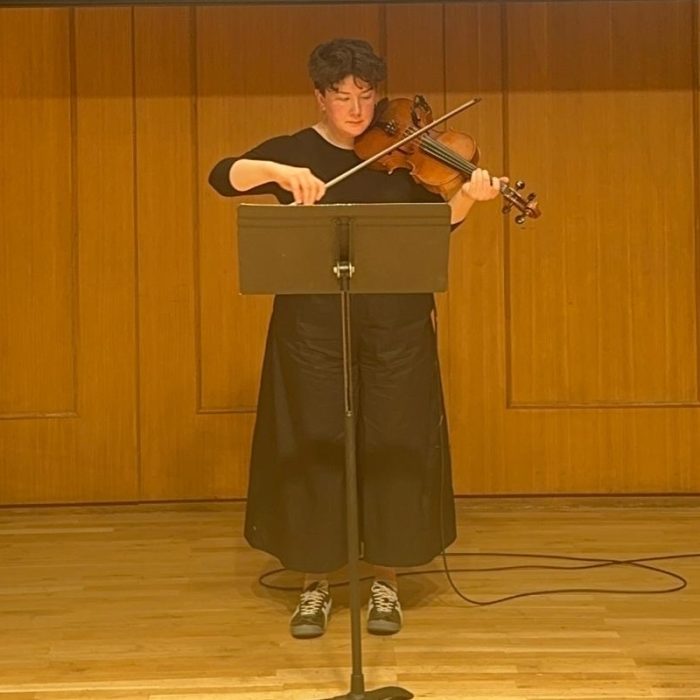
Proposal: Authentic Bodies: Diverse Embodiment and Disabled Identity in a String Performance Practice.
Niamh Gallagher
This audiovisual experiment will explore how to represent the embodied knowledge of her own disabled body through interactions with her instrument, the viola. The audiovisual material presented will put Gallagher’s disabled body at the centre of the experiment, not as something to be controlled, critiqued or to overcome but something to embrace, allowing music to be created from the stimulus of her body.
The audiovisual material will be an amalgamation of multiple instances of practice, including the layering of practice videos, shorter close-up clips of points of interest and a performance. These different avenues will combine to give insight into Gallagher’s own embodiment, and the expression of her disabled body through the medium of viola performance and interactions. Highlighting that every instance of practice is different and flexible, the variable nature of being a person and violist with a disabled body, the negotiations of this will be communicated and shown through this visual form.
Proposal
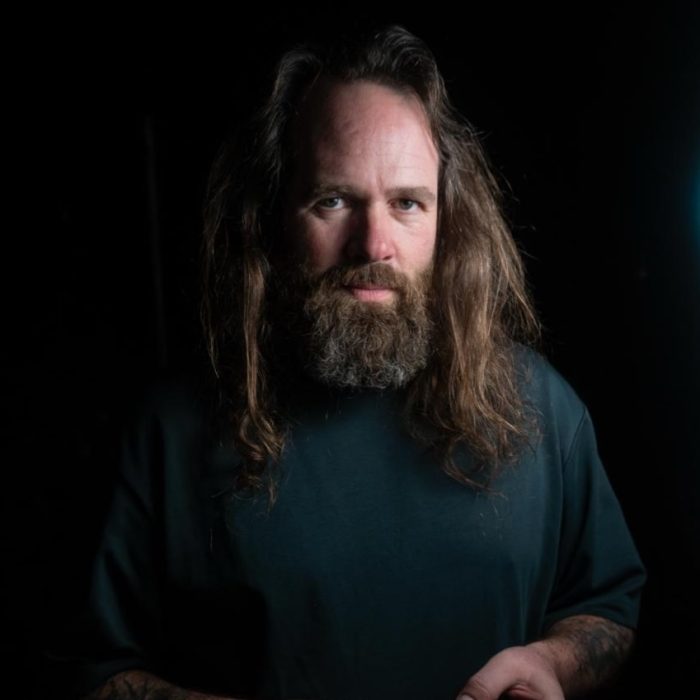
Juliet Merchant
For the KISMIF Research Challenge I will create an audio-visual piece that builds on my current cross-disciplinary research into sonic capitalism and its psychological affect in London. My focus will be on the process of creating semantic meaning from unfiltered, auditory and visual information, which draws from attention theories by Broadbent, Treisman, and Von Wright. I aim to explore how auditory information continues to affect us even when we attempt to filter it out, and what potential meanings we can receive from fragmented information.
I will video and record proximal visuals and sounds in my environment. I will then enact Broadbent’s filter model and select certain information to use. I will make compositional decisions that can serve as semantic processing by suggesting connections between certain pieces of information. The use of metaphor will allow for a non-linearity in perception and is a useful tool in suggestion. I will also incorporate spatialisation in the audio in order to represent or disrupt perceived location. The level of congruence between the video and audio will fluctuate depending on the requirement for metaphor. Overall, the boundary between literal or subverted realism will be blurred with the intention of leading the audience to different perspectives.
Researcher(s):
Publication Type: Rationale / Hypothesis
Date Published:
Language: English
Licence: CC BY-NC-SA 4.0
DOI:
Click here to submit and read peer review
No peer review comments on this section yet.
Add a peer review comment Click here to cancel reply.
Method
This protocol establishes a structured method for collaborative practice research between two music practitioners through asynchronous video exchange. Participants independently develop proposals and create 10-minute videos exploring a practice concept, technique, or approach. Videos are exchanged, prompting each participant to create a second 10-minute response exploring how their partner’s work stimulates new directions in their own practice. The process concludes with a 20-minute filmed discussion analysing interpretative choices and outcomes. The protocol produces a 60-minute structure, serving as peer-reviewed, DOI-allocated practice research output via JISC Octopus. This method makes tacit practice knowledge explicit and generates transferable insights into practice innovation.
For further details see: https://doi.org/10.57874/s80m-1g18
Researcher(s):

Publication Type: Method
Date Published: 19th Jun 2026
Language: English
Licence: CC BY-NC-SA 4.0
DOI: https://doi.org/10.57874/s80m-1g18
Click here to submit and read peer review
No peer review comments on this section yet.
Add a peer review comment Click here to cancel reply.
Results / Sources
Researcher(s):
Publication Type: Results / Sources
Date Published:
Language: English
Licence: CC BY-NC-SA 4.0
DOI:
Click here to submit and read peer review
No peer review comments on this section yet.
Add a peer review comment Click here to cancel reply.
Analysis
Researcher(s):
Publication Type: Analysis
Date Published:
Language: English
Licence: CC BY-NC-SA 4.0
DOI:
Click here to submit and read peer review
No peer review comments on this section yet.
Add a peer review comment Click here to cancel reply.
Interpretation - Coming Soon
Researcher(s):

Publication Type: Interpretation
Date Published:
Language: English
Licence: CC BY-NC-SA 4.0
DOI:
Click here to submit and read peer review
No peer review comments on this section yet.
Add a peer review comment Click here to cancel reply.
Applications / Implications - Coming Soon
Researcher(s):
Publication Type: Applications / Implications
Date Published:
Language: English
Licence: CC BY-NC-SA 4.0
DOI:
Click here to submit and read peer review
No peer review comments on this section yet.
Add a peer review comment