Abstract / Summary
Researcher(s):


Click here to submit and read peer review
Add a peer review comment Click here to cancel reply.
Research Problem
The Research Challenge was initiated by the following Call For Participation
Challenge Overview
This Research Challenge invites postgraduate researchers and early career researchers (PGRs & ECRs) to share, exchange, and reflect on the qualitative methods they use to investigate their own musical practice. Different research aims, forms of practice and contexts require different methods and the C21MP research centre is dedicated to supporting PGRs and ECRs by conducting research into those methods. This project is one of several steps we are taking in that direction.
Practice research requires methods that can get close to the lived experience of doing music — the decisions, impulses, and processes that unfold in real time, before reflection reshapes them. Established qualitative methods such as stimulated recall, think-aloud protocols, video diary, and autoethnography have all been used in this context, but researchers frequently adapt and refine these approaches to suit their specific practice and research questions.
This challenge is designed to describe, make explicit and share that methodological knowledge — the customisations, workarounds, and insights that rarely make it into formal publications.
What does the challenge involve?
- You create a 10-minute video demonstrating a qualitative method you use in your own practice research — including how and why you have adapted it to your aims, practice and context.
- You are paired with another participant and exchange videos.
- You explore their method in relation to your own practice and create a second 10-minute response video.
- You watch your partner’s response to your method.
- You and your partner meet online for a 20-minute filmed discussion: 10 minutes on how each of you interpreted and adapted the method, and 10 minutes analysing what the exchange revealed.
The four videos and the discussion are edited into a 60-minute research output and published by C21MP as a jointly authored, DOI-allocated, peer-reviewed practice research publication via the UK’s JISC Octopus.ac system.
What kinds of methods are in scope?
Any qualitative method that aims to capture the lived experience of musical practice from the inside — for example:
- Stimulated recall (video-assisted or audio-assisted)
- Think-aloud / verbal protocol
- Autoethnography
- Practice diary / video diary
- Reflective journaling
- Other approaches — provided they are oriented towards lived experience rather than post-hoc theoretical explanation
Researcher(s):


Publication Type: Research Problem
Date Published:
Language: English
Licence: CC BY-NC-SA 4.0
DOI:
Click here to submit and read peer review
No peer review comments on this section yet.
Add a peer review comment Click here to cancel reply.
Rationale / Hypothesis
Proposal: field-listening recall
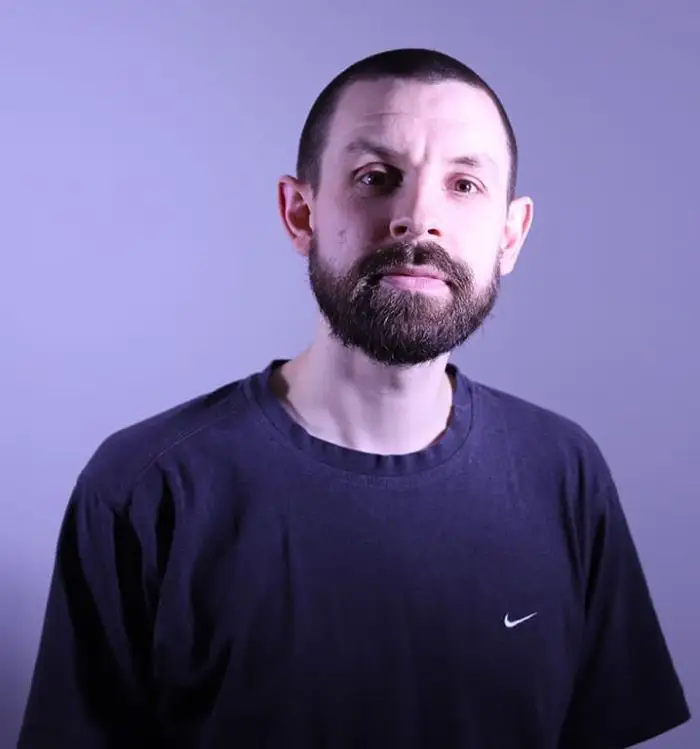
Dan Stern
I propose to demonstrate field-listening recall, a qualitative method developed within my PhD on spatialised improvised polyphony. My practice involves saxophone, clarinet and piano in staged relations with loudspeakers, microphones, room acoustics, loops and resonances. The musical setting is contemporary improvisation, experimental music and artistic research in spatial sound.
The method investigates how a performer senses changing relational conditions within deliberately asymmetrical fields. These fields are staged through uneven loudspeaker placement, proximity, microphone pickup, resonance, masking and recorded sound. Field-listening names an attunement to shifting distributions of audibility, resistance, salience and agency produced through the performance context. Improvisation becomes a way of sounding these conditions: gestures emerge through contact with spatial, acoustic and technological forces, while those forces are altered by the gestures they receive.
Field-listening recall extends this performative sensing into a shareable reflective method. I adapt stimulated recall and practice diary approaches by recording an improvised session, listening back soon afterwards, and making spoken annotations at moments where the relational field appears to reorganise. Threshold events may occur when resonance redirects a gesture, or asymmetrical loudspeaker placement alters what becomes playable, audible or risky. The aim is to make field-sensing available for exchange.
Proposal: Video Diary Use
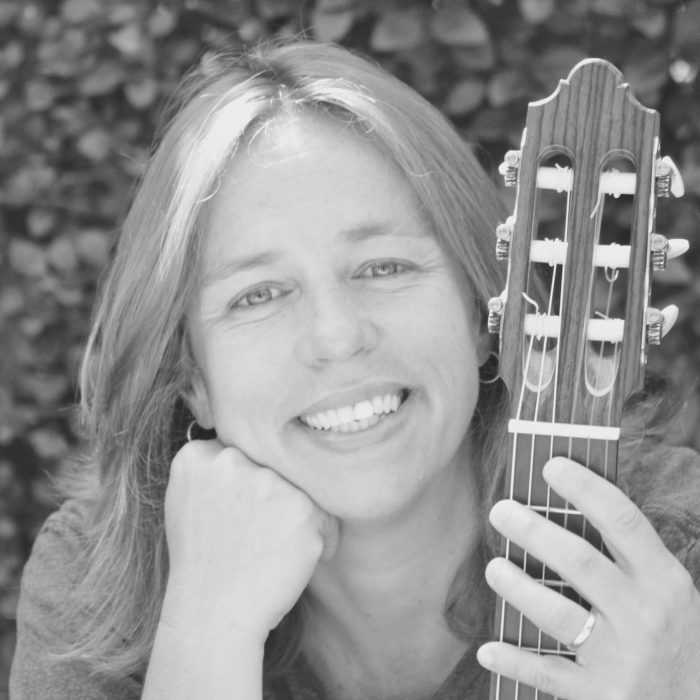
Joseph Thornber
Video diaries are a valuable tool in my reflection of musical performance practice. When engaging in historically informed musical performance and research, utilising video diaries allows me to record my musical embodiment experiences and responses, both physically and emotionally, and capture real-time reflections on my practice. This is particularly useful when focusing on gesture and technique, as having an ‘in the moment’ video diary lets me explore the nuances and relationships between bodily experiences and quality of playing. In my role as a PhD student and keyboard player examining these issues at the University of York, I have begun to link these relationships to my emotional states when playing, which is greatly aided by the recollection through video diaries.
I believe that exploring this methodology, both its affordances and constraints, would offer value to this challenge through highlighting the considerations and adaptations when using video diaries in the context of historically informed keyboard performance. By recording and sharing my lived experiences with this methodology, I hope to develop my practice research and contribute to this project by providing unique insights into my qualitative approach to historical keyboard performance practice, and to learn from other researchers through their approaches.
Researcher(s):
Publication Type: Rationale / Hypothesis
Date Published:
Language: English
Licence: CC BY-NC-SA 4.0
DOI:
Click here to submit and read peer review
No peer review comments on this section yet.
Add a peer review comment Click here to cancel reply.
Method
This protocol establishes a structured method for collaborative practice research between two music practitioners through asynchronous video exchange. Participants independently develop proposals and create 10-minute videos exploring a practice concept, technique, or approach. Videos are exchanged, prompting each participant to create a second 10-minute response exploring how their partner’s work stimulates new directions in their own practice. The process concludes with a 20-minute filmed discussion analysing interpretative choices and outcomes. The protocol produces a 60-minute structure, serving as peer-reviewed, DOI-allocated practice research output via JISC Octopus. This method makes tacit practice knowledge explicit and generates transferable insights into practice innovation.
For further details see: https://doi.org/10.57874/s80m-1g18
Researcher(s):
Publication Type: Method
Date Published:
Language: English
Licence: CC BY-NC-SA 4.0
DOI:
Click here to submit and read peer review
No peer review comments on this section yet.
Add a peer review comment Click here to cancel reply.
Results / Sources
Researcher(s):
Publication Type: Results / Sources
Date Published:
Language: English
Licence: CC BY-NC-SA 4.0
DOI:
Click here to submit and read peer review
No peer review comments on this section yet.
Add a peer review comment Click here to cancel reply.
Analysis
Researcher(s):
Publication Type: Analysis
Date Published:
Language: English
Licence: CC BY-NC-SA 4.0
DOI:
Click here to submit and read peer review
No peer review comments on this section yet.
Add a peer review comment Click here to cancel reply.
Interpretation - Coming Soon
Researcher(s):

Publication Type: Interpretation
Date Published:
Language: English
Licence: CC BY-NC-SA 4.0
DOI:
Click here to submit and read peer review
No peer review comments on this section yet.
Add a peer review comment Click here to cancel reply.
Applications / Implications - Coming Soon
Researcher(s):
Publication Type: Applications / Implications
Date Published:
Language: English
Licence: CC BY-NC-SA 4.0
DOI:
Click here to submit and read peer review
No peer review comments on this section yet.
This video offered a very interesting narrative through two presentations that initially seemed to come from very different perspectives but ultimately had a great deal in common. It was fascinating to witness how much both Dan and Joe learned from each other, as well as the different roles that video played in their respective practices and the ways that video as a research tool shaped their conceptions of space in particular.
I found the discussion of the contrast between the fixed nature of Joseph’s instrumental setup and Dan’s more flexible, movement-based engagement with the saxophone and clarinet particularly interesting, especially when considered in terms of what the space afforded each of them. It was also stimulating to observe how Dan’s application of Joseph’s video diary methods further expanded the way he conceived of his relationship with his performance space, transforming his understanding of staging from something fixed prior to performance into something emergent and dynamic. Crucially, it was the adoption of Joe’s methods that led to this revelation, highlighting the merits of sharing, learning, and adopting methods from other practitioners.
From Joseph’s perspective, I appreciated how Dan’s theoretical and methodological approach to social re-entry influenced his openness to the inevitably unpredictable external elements present in his performance situations, such as people moving in and out of the performance space, often a church. This made me think about the quotidian nature of much practice and the judgemental assumptions that video-based reflection of different kinds can help to dislodge or reframe.
Taken together, these methods and shared insights gave me a great deal to think about in relation to my own work and what I learned from engaging with the video-based methods employed by my own research challenge partner. This is certainly something that I will continue to experiment with in my own practice as a means of capturing, to use Dan’s term, the “trace” of the video, and of analysing elements of my practice that may otherwise be elusive or impossible to access or communicate through other means.