Abstract / Summary
Researcher(s):
Click here to submit and read peer review
Add a peer review comment Click here to cancel reply.
Research Problem
The Research Challenge was initiated by the following Call For Participation
Challenge Overview
This Research Challenge invites postgraduate researchers and early career researchers (PGRs & ECRs) to share, exchange, and reflect on the qualitative methods they use to investigate their own musical practice. Different research aims, forms of practice and contexts require different methods and the C21MP research centre is dedicated to supporting PGRs and ECRs by conducting research into those methods. This project is one of several steps we are taking in that direction.
Practice research requires methods that can get close to the lived experience of doing music — the decisions, impulses, and processes that unfold in real time, before reflection reshapes them. Established qualitative methods such as stimulated recall, think-aloud protocols, video diary, and autoethnography have all been used in this context, but researchers frequently adapt and refine these approaches to suit their specific practice and research questions.
This challenge is designed to describe, make explicit and share that methodological knowledge — the customisations, workarounds, and insights that rarely make it into formal publications.
What does the challenge involve?
- You create a 10-minute video demonstrating a qualitative method you use in your own practice research — including how and why you have adapted it to your aims, practice and context.
- You are paired with another participant and exchange videos.
- You explore their method in relation to your own practice and create a second 10-minute response video.
- You watch your partner’s response to your method.
- You and your partner meet online for a 20-minute filmed discussion: 10 minutes on how each of you interpreted and adapted the method, and 10 minutes analysing what the exchange revealed.
The four videos and the discussion are edited into a 60-minute research output and published by C21MP as a jointly authored, DOI-allocated, peer-reviewed practice research publication via the UK’s JISC Octopus.ac system.
What kinds of methods are in scope?
Any qualitative method that aims to capture the lived experience of musical practice from the inside — for example:
- Stimulated recall (video-assisted or audio-assisted)
- Think-aloud / verbal protocol
- Autoethnography
- Practice diary / video diary
- Reflective journaling
- Other approaches — provided they are oriented towards lived experience rather than post-hoc theoretical explanation
Researcher(s):


Publication Type: Research Problem
Date Published:
Language: English
Licence: CC BY-NC-SA 4.0
DOI:
Click here to submit and read peer review
No peer review comments on this section yet.
Add a peer review comment Click here to cancel reply.
Rationale / Hypothesis
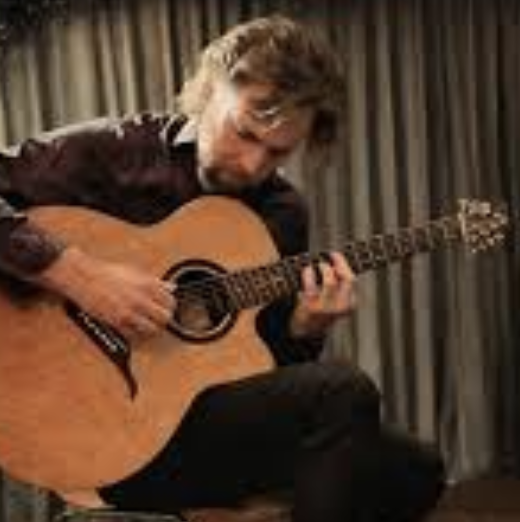
Proposal: The recontextualization of familiar melodies in the field of ‘open-form improvisation’
Mark Schimmel
My PhD topic investigates the recontextualization of familiar melodies in the field of ‘open-form improvisation’ (Borgo, 2022). Through these recontextualizations, I am challenging the plasticity of songs in a solo guitar setting and signing my own ‘personal listening’, (Szendy, 2008), an invitation to ‘listen with my ears’! My aesthetic outcomes challenge the exchange between the ideas from ‘Western pop music’ and ‘Western contemporary art music. In the project, the improvised and recontextualized material undergo simultaneous processes of deterritorialization and reterritorialization, mutually influencing one another without fixed hierarchical relationships.
Musically, I am very inspired by the solo guitar recordings by Mary Halvorson, Derek Bailey and Marc Ribot, I heavily draw on their concepts. In the video, I will experiment with ‘The long and winding road’ by The Beatles. I aim to apply different approaches of artists mentioned above, so differing outcomes can be scrutinized. I will add the name of each approach while it’s being played. I aim to edit the video in such a way that the different outcomes can be heard next to each other. In addition to this, I will transcribe my own playing, and let my transcription move along simultaneously with the music.
Proposal: Creating with the composer– performer as composer
Márton Szives
As a performer, I collaborate annually with five to six contemporary composers on new works in which we develop novel instrumental techniques, performance possibilities, or thematic concepts. As a result, I premiere between five and ten new compositions each year, interpreting composers’ ideas through my own performance language. I am currently facing an especially exciting challenge: composer Gyula Bánkövi has asked me to compose the instrumental part to accompany his electronic track, thereby co-creating an electroacoustic work, however I have never written more than exercises or etudes for myself.
Within my artistic research for C21MP, I will document the collaborative process between composer and performer compelled into a compositional role, examining how these positions interact and influence one another. Specifically, I ask: how can a performer fulfil a purely acoustic ideological framework while simultaneously engaging in composition?
Using practice diary, video diary, reflective journalism, and interview (with Bánkövi), I will trace the creation of a section of the work, documenting how the instrumental part (Szives) translates the conceptual material of the electronic track (Bánkövi) into an instrumental language and a written score. The outcome will be a journal-style paper of the creative process, also materialised in score and recordings (video or audio), offering insight into collaborative authorship and performer-led compositional practice in contemporary electroacoustic music.
Researcher(s):
Publication Type: Rationale / Hypothesis
Date Published:
Language: English
Licence: CC BY-NC-SA 4.0
DOI:
Click here to submit and read peer review
No peer review comments on this section yet.
Add a peer review comment Click here to cancel reply.
Method
This protocol establishes a structured method for collaborative practice research between two music practitioners through asynchronous video exchange. Participants independently develop proposals and create 10-minute videos exploring a practice concept, technique, or approach. Videos are exchanged, prompting each participant to create a second 10-minute response exploring how their partner’s work stimulates new directions in their own practice. The process concludes with a 20-minute filmed discussion analysing interpretative choices and outcomes. The protocol produces a 60-minute structure, serving as peer-reviewed, DOI-allocated practice research output via JISC Octopus. This method makes tacit practice knowledge explicit and generates transferable insights into practice innovation.
For further details see: https://doi.org/10.57874/s80m-1g18
Researcher(s):
Publication Type: Method
Date Published:
Language: English
Licence: CC BY-NC-SA 4.0
DOI:
Click here to submit and read peer review
No peer review comments on this section yet.
Add a peer review comment Click here to cancel reply.
Results / Sources
Researcher(s):
Publication Type: Results / Sources
Date Published:
Language: English
Licence: CC BY-NC-SA 4.0
DOI:
Click here to submit and read peer review
No peer review comments on this section yet.
Add a peer review comment Click here to cancel reply.
Analysis
Researcher(s):
Publication Type: Analysis
Date Published:
Language: English
Licence: CC BY-NC-SA 4.0
DOI:
Click here to submit and read peer review
No peer review comments on this section yet.
Add a peer review comment Click here to cancel reply.
Interpretation - Coming Soon
Researcher(s):

Publication Type: Interpretation
Date Published:
Language: English
Licence: CC BY-NC-SA 4.0
DOI:
Click here to submit and read peer review
No peer review comments on this section yet.
Add a peer review comment Click here to cancel reply.
Applications / Implications - Coming Soon
Researcher(s):
Publication Type: Applications / Implications
Date Published:
Language: English
Licence: CC BY-NC-SA 4.0
DOI:
Click here to submit and read peer review
No peer review comments on this section yet.
This video featured some very compelling demonstrations of practice from a pair of composer-performers working in very different areas and on very different instruments. In both cases, the practice was of a high standard, and, as a Beatles and Neil Young fan, I found Mark’s reharmonisations, and his innovative improvisational techniques and frameworks particularly engaging.
I wonder, however, to what extent both Mark and Márton were presenting and sharing their compositional methods rather than research methods. There seemed to be a very productive discussion and practical application of the former between the two, which was rewarding and interesting to observe. However, I was still left considering whether all experimental approaches to composition can be regarded as research. What are the generalisable applications of either method to other fields of practice, for example? What other types of research questions might they address, beyond those relating to specific compositional concerns? In other words, does the work generate knowledge beyond the artwork itself? I think it would be helpful to see how these ideas might be formulated and contextualised a little more fully, beyond their final realisation in performance, or to hear a defence of their presentation here, since these are complex and deeply subjective questions!
In terms of research and knowledge, I thought the concluding discussion of poly-environmental practice opened up some fruitful areas of inquiry, particularly regarding how different tools and techniques provoke different modes of listening. The ideas of translation, and the role of the performance environment in shaping how musical translations take place, was another interesting area touched upon in the final discussion.
To be clear, I found both Mark’s and Márton’s practices and compositional approaches extremely interesting and it was great to see how much they learned from one another. I would simply be interested in seeing and hearing more about how these approaches could be contextualised in relation to broader and more generalisable forms of knowledge.