Abstract / Summary
Researcher(s):

Click here to submit and read peer review
Add a peer review comment Click here to cancel reply.
Research Problem
The Research Challenge was initiated by the following Call For Participation
Challenge Overview
This Research Challenge invites postgraduate researchers and early career researchers (PGRs & ECRs) to share, exchange, and reflect on the qualitative methods they use to investigate their own musical practice. Different research aims, forms of practice and contexts require different methods and the C21MP research centre is dedicated to supporting PGRs and ECRs by conducting research into those methods. This project is one of several steps we are taking in that direction.
Practice research requires methods that can get close to the lived experience of doing music — the decisions, impulses, and processes that unfold in real time, before reflection reshapes them. Established qualitative methods such as stimulated recall, think-aloud protocols, video diary, and autoethnography have all been used in this context, but researchers frequently adapt and refine these approaches to suit their specific practice and research questions.
This challenge is designed to describe, make explicit and share that methodological knowledge — the customisations, workarounds, and insights that rarely make it into formal publications.
What does the challenge involve?
- You create a 10-minute video demonstrating a qualitative method you use in your own practice research — including how and why you have adapted it to your aims, practice and context.
- You are paired with another participant and exchange videos.
- You explore their method in relation to your own practice and create a second 10-minute response video.
- You watch your partner’s response to your method.
- You and your partner meet online for a 20-minute filmed discussion: 10 minutes on how each of you interpreted and adapted the method, and 10 minutes analysing what the exchange revealed.
The four videos and the discussion are edited into a 60-minute research output and published by C21MP as a jointly authored, DOI-allocated, peer-reviewed practice research publication via the UK’s JISC Octopus.ac system.
What kinds of methods are in scope?
Any qualitative method that aims to capture the lived experience of musical practice from the inside — for example:
- Stimulated recall (video-assisted or audio-assisted)
- Think-aloud / verbal protocol
- Autoethnography
- Practice diary / video diary
- Reflective journaling
- Other approaches — provided they are oriented towards lived experience rather than post-hoc theoretical explanation
Researcher(s):


Publication Type: Research Problem
Date Published:
Language: English
Licence: CC BY-NC-SA 4.0
DOI:
Click here to submit and read peer review
No peer review comments on this section yet.
Add a peer review comment Click here to cancel reply.
Rationale / Hypothesis
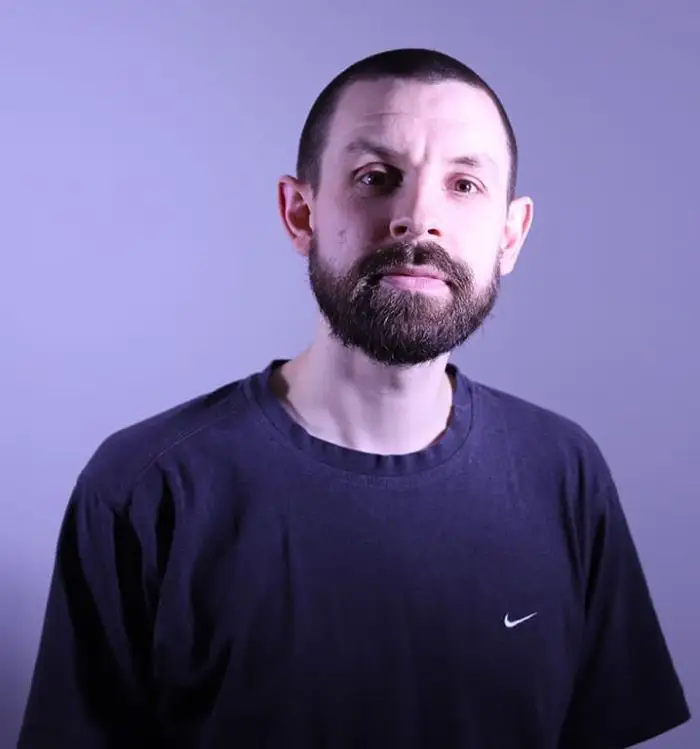
Proposal: Re-performing Flow: VR as an Embodied Elicitation Method
Nicholas Flatt
This project explored how to access musicians’ lived experience of optimal performance, particularly moments of flow that are difficult to capture in real time. Reporting on these experiences during performance tends to disrupt them, meaning they are often only identifiable after they have passed. Situated within practice-based research, the study worked with professional musicians.
Informed by an enactive approach, I used virtual reality (VR) as embodied elicitation. Musicians re-performed a piece they associated with a previous flow experience, anchoring the method in a specific moment. This allowed reflection while participants remained situated in a virtual concert hall environment.
Combined with drawing elicitation, this created a progression from representation to re-enactment. The VR environment acts as a reflective mirror, surfacing aspects of performance that are typically implicit.
Although the system was an early prototype, built on simulation work at the Centre for Performance Science (RCM), its limitations proved useful: breakdowns in presence disrupted flow and highlighted environmental and social conditions that support or hinder optimal performance, while prompting reflection that facilitates self-regulated learning.
The method does not aim to capture flow directly, but uses VR as a probe to engage performers in situated reflection on their own practice.
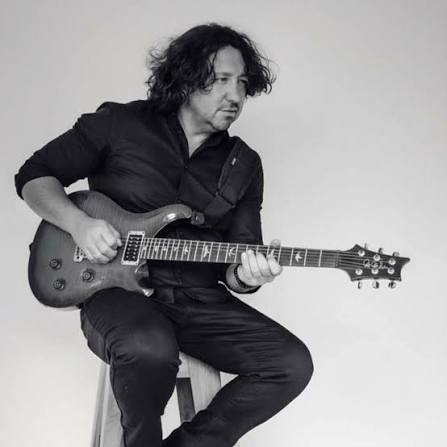
Proposal: Investigating Intentional Decision-Making in Improvisation as Composition: A Three-Tier Practice Research Method
Toby Armstrong
This proposal presents a qualitative method developed through my doctoral practice research into improvisation leading to composition in jazz. The method investigates intentional decision-making from inside musical practice by combining “practice as research” (Nelson, 2013) and sub-structured interview techniques (DiCicco-Bloom and Crabtree, 2006) within a three-tier improvisation-as-composition process. Drawing on Nettl’s concept of a continuum between improvisation and composition (Nettl, 1998), the method establishes a series of analytical anchor points along this continuum, allowing the unfolding process to be accessed at specific moments during practice. Working through bebop contrafact development, improvising composers move from improvised action to “motivic development” (Porter, 1985), to final “assemblage” (Cobussen, 2017), with reflection taking place at these points rather than only after the event, beginning with moments of “compositional genesis” (Hodges, 2007).
The method places the researcher inside the improvisation-as-composition process at defined stages, allowing musical decisions to be examined as they are selected, developed, and connected across evolving structures. By inserting the researcher at these points, the method provides emic insight into the participant’s intentions while also enabling etic analysis through the transcription of musical material and the thematic coding of interviews, bringing musical and qualitative data into direct relation.
References
Cobussen, M. (2017) The Field of Musical Improvisation. Leiden: Leiden University Press.
Cobussen, M. (2021) ‘Improvising Artistic Research’, in Cobussen, M. (ed.) The Routledge Companion to Applied Musicology. London: Routledge.
DiCicco-Bloom, B. and Crabtree, B.F. (2006) ‘The qualitative research interview’, Medical Education, 40(4), pp. 314–321.
Hodges, D. (2007) The Analysis of Jazz Improvisational Language and its Use in Generating New Composition and Improvisation. PhD thesis.
Nelson, R. (2013) Practice as Research in the Arts: Principles, Protocols, Pedagogies, Resistances. Basingstoke: Palgrave Macmillan.
Nettl, B. (1998) ‘An art neglected in scholarship’, in Nettl, B. and Russell, M. (eds.) In the Course of Performance: Studies in the World of Musical Improvisation. Chicago: University of Chicago Press.
Porter, L. (1985) ‘John Coltrane’s A Love Supreme: Jazz improvisation as composition’, The Musical Quarterly, 72(4), pp. 593–620.
Researcher(s):
Publication Type: Rationale / Hypothesis
Date Published:
Language: English
Licence: CC BY-NC-SA 4.0
DOI:
Click here to submit and read peer review
No peer review comments on this section yet.
Add a peer review comment Click here to cancel reply.
Method
This protocol establishes a structured method for collaborative practice research between two music practitioners through asynchronous video exchange. Participants independently develop proposals and create 10-minute videos exploring a practice concept, technique, or approach. Videos are exchanged, prompting each participant to create a second 10-minute response exploring how their partner’s work stimulates new directions in their own practice. The process concludes with a 20-minute filmed discussion analysing interpretative choices and outcomes. The protocol produces a 60-minute structure, serving as peer-reviewed, DOI-allocated practice research output via JISC Octopus. This method makes tacit practice knowledge explicit and generates transferable insights into practice innovation.
For further details see: https://doi.org/10.57874/s80m-1g18
Researcher(s):
Publication Type: Method
Date Published:
Language: English
Licence: CC BY-NC-SA 4.0
DOI:
Click here to submit and read peer review
No peer review comments on this section yet.
Add a peer review comment Click here to cancel reply.
Results / Sources
Researcher(s):
Publication Type: Results / Sources
Date Published:
Language: English
Licence: CC BY-NC-SA 4.0
DOI:
Click here to submit and read peer review
No peer review comments on this section yet.
Add a peer review comment Click here to cancel reply.
Analysis
Researcher(s):
Publication Type: Analysis
Date Published:
Language: English
Licence: CC BY-NC-SA 4.0
DOI:
Click here to submit and read peer review
No peer review comments on this section yet.
Add a peer review comment Click here to cancel reply.
Interpretation - Coming Soon
Researcher(s):

Publication Type: Interpretation
Date Published:
Language: English
Licence: CC BY-NC-SA 4.0
DOI:
Click here to submit and read peer review
No peer review comments on this section yet.
Add a peer review comment Click here to cancel reply.
Applications / Implications - Coming Soon
Researcher(s):
Publication Type: Applications / Implications
Date Published:
Language: English
Licence: CC BY-NC-SA 4.0
DOI:
Click here to submit and read peer review
No peer review comments on this section yet.
This video was notable for its strong focus on technology, principally stemming from Nic’s use of VR in his research methods. It was particularly interesting to see Nic’s response to Toby’s seemingly quite different approach and his initial assumption that Toby would be unlikely to find a relevant application for VR in his work. With this in mind, it was then wonderful to witness Toby’s enthusiasm for VR as a revelatory research method in his parallel response video and to observe the energized discussion that followed.
For me, this is one of the standout qualities of these multi-part videos: the narrative that emerges between two researchers as their methods and research areas respond to and influence one another over the course of the exchange. In this sense, the prospect of a future collaboration between Nic and Toby was particularly exciting to consider, highlighting the potential for high-tech artistic research methods to intersect with and inform more traditional areas of practice, albeit ones explored from a novel perspective, as illustrated by Toby’s multi-stage process of analysing tacit decision-making in contrafact composition.
Having worked with VR and VR research in a higher education context myself, I could see considerable potential in Nic’s methods for pedagogical music applications. In this respect, it would be interesting to hear more about whether VR has affected or shaped Nic’s own artistic practice, or whether it is something he has primarily developed and employed with experimental participants?
Finally, with regard to experimentation, I think a broader point emerged from this discussion concerning the extent to which any research method affects the situation being studied, how researchers interpret their findings with this in mind, and the degree to which research methods may ultimately give rise to artistic outcomes that might otherwise have been inconceivable.