Abstract / Summary
Researcher(s):

Click here to submit and read peer review
Add a peer review comment Click here to cancel reply.
Research Problem
The Research Challenge was initiated by the following Call For Participation
Challenge Overview
This Research Challenge invites postgraduate researchers and early career researchers (PGRs & ECRs) to share, exchange, and reflect on the qualitative methods they use to investigate their own musical practice. Different research aims, forms of practice and contexts require different methods and the C21MP research centre is dedicated to supporting PGRs and ECRs by conducting research into those methods. This project is one of several steps we are taking in that direction.
Practice research requires methods that can get close to the lived experience of doing music — the decisions, impulses, and processes that unfold in real time, before reflection reshapes them. Established qualitative methods such as stimulated recall, think-aloud protocols, video diary, and autoethnography have all been used in this context, but researchers frequently adapt and refine these approaches to suit their specific practice and research questions.
This challenge is designed to describe, make explicit and share that methodological knowledge — the customisations, workarounds, and insights that rarely make it into formal publications.
What does the challenge involve?
- You create a 10-minute video demonstrating a qualitative method you use in your own practice research — including how and why you have adapted it to your aims, practice and context.
- You are paired with another participant and exchange videos.
- You explore their method in relation to your own practice and create a second 10-minute response video.
- You watch your partner’s response to your method.
- You and your partner meet online for a 20-minute filmed discussion: 10 minutes on how each of you interpreted and adapted the method, and 10 minutes analysing what the exchange revealed.
The four videos and the discussion are edited into a 60-minute research output and published by C21MP as a jointly authored, DOI-allocated, peer-reviewed practice research publication via the UK’s JISC Octopus.ac system.
What kinds of methods are in scope?
Any qualitative method that aims to capture the lived experience of musical practice from the inside — for example:
- Stimulated recall (video-assisted or audio-assisted)
- Think-aloud / verbal protocol
- Autoethnography
- Practice diary / video diary
- Reflective journaling
- Other approaches — provided they are oriented towards lived experience rather than post-hoc theoretical explanation
Researcher(s):


Publication Type: Research Problem
Date Published:
Language: English
Licence: CC BY-NC-SA 4.0
DOI:
Click here to submit and read peer review
No peer review comments on this section yet.
Add a peer review comment Click here to cancel reply.
Rationale / Hypothesis
Proposal: Safe In Sound
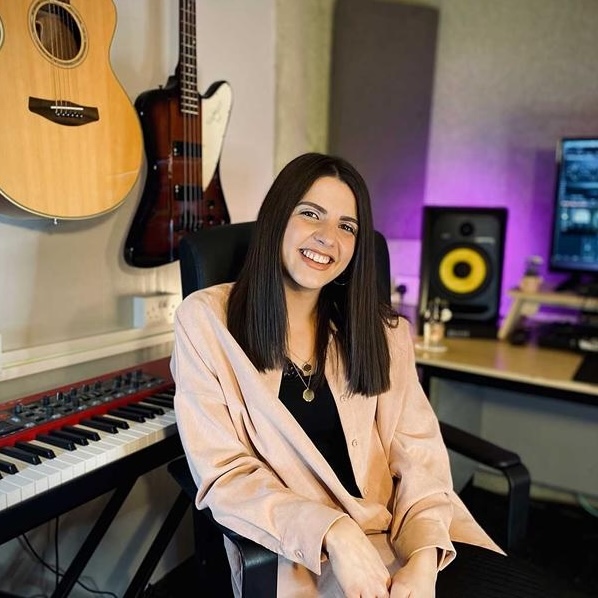
Lauren Gilmour
I am a part-time, practice-based PhD student and my project Safe in Sound explores queer ‘safe spaces’ through emotional geography and sonic cartography. My research approaches listening as a relational and political practice, examining how the conditions of listening shape experiences of safety, space, and community.
This proposal presents a structured listening diary method developed within the first six months of my study to explore listening as an embodied, relational practice. It focuses on the sonic and affective dynamics of thresholds within queer environments, where boundaries between public/private and safe/unsafe are actively negotiated.
The listening diary adapts reflective journaling into a systematic, practice-led method for capturing lived experience through sound-walking, listening and subsequent meaning-making. Each entry follows a structured framework, including contextual conditions, sound description, embodied response, and reflections on social atmosphere. Entries also incorporate micro-experiments (e.g. repeated crossings, altered pacing) to test how movement and positioning shape auditory perception. Some prompts draw on Pauline Oliveros’ Sonic Meditations (1974) as stimulus exercises to expand attentional awareness.
While this method is intended for future use with LGBTQ+ participants, this current phase operates as early, exploratory, pre-ethics fieldwork, undertaken autoethnographically to refine the method. The subsequent video will demonstrate the method in practice and reflect on its potential for future participatory listening research.
Proposal: Composition used to investigate my experience of live performance.
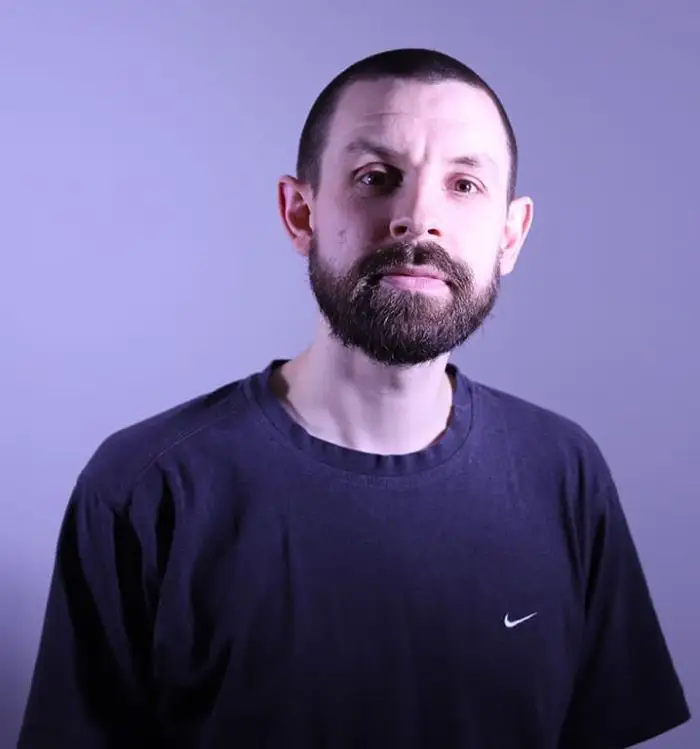
George Speck
This is based on work I undertook in which composition was a key method used to investigate my experience of live performance. Following the project, I articulate my understanding of live performance experience very differently and would be very interested to share the method and have it challenged by peers:
Trained since childhood as a saxophonist in the classical and jazz tradition, my background makes me particularly interested in the challenges practice research can make to the divide often drawn between the work of a composer and a performer. Inspired by practice-based work of McLaughlin, Kanga and Benjamin (2021) that highlighted overlap composer and performer ‘technique’, I wanted to direct a practice-research project towards an interest of mine – the ‘live’ performance experience for the musician. My method was a critical and reflective preparation for a solo soprano saxophone concert incorporating composition of original material – classical-jazz fusion music that reflected the style I most regularly perform.
Can composition be a valid means of enquiry into live experience? How are knowledge forms traditionally associated with composition – such as understandings of tonality, motif and form – felt during live performance? The process was documented through self-reflection and abandoned notated motifs. The eventual output consisted of: a score, a video of the performance and a diagram conveying what I felt in the live playing experience. My video would showcase these whilst commentating on the merits of composition as method of enquiry into liveness in performance.
Reference: Scott McLaughlin, Zubin Kanga, Mira Benjamin, ‘Composing Technique, Performing Technique‘, Journal for Artistic Research, 23 (2021) https://www.researchcatalogue.net/view/711320/1174454/0/0 [accessed 07/04/2026]
Researcher(s):
Publication Type: Rationale / Hypothesis
Date Published:
Language: English
Licence: CC BY-NC-SA 4.0
DOI:
Click here to submit and read peer review
No peer review comments on this section yet.
Add a peer review comment Click here to cancel reply.
Method
This protocol establishes a structured method for collaborative practice research between two music practitioners through asynchronous video exchange. Participants independently develop proposals and create 10-minute videos exploring a practice concept, technique, or approach. Videos are exchanged, prompting each participant to create a second 10-minute response exploring how their partner’s work stimulates new directions in their own practice. The process concludes with a 20-minute filmed discussion analysing interpretative choices and outcomes. The protocol produces a 60-minute structure, serving as peer-reviewed, DOI-allocated practice research output via JISC Octopus. This method makes tacit practice knowledge explicit and generates transferable insights into practice innovation.
For further details see: https://doi.org/10.57874/s80m-1g18
Researcher(s):
Publication Type: Method
Date Published:
Language: English
Licence: CC BY-NC-SA 4.0
DOI:
Click here to submit and read peer review
No peer review comments on this section yet.
Add a peer review comment Click here to cancel reply.
Results / Sources
Researcher(s):
Publication Type: Results / Sources
Date Published:
Language: English
Licence: CC BY-NC-SA 4.0
DOI:
Click here to submit and read peer review
No peer review comments on this section yet.
Add a peer review comment Click here to cancel reply.
Analysis
Researcher(s):
Publication Type: Analysis
Date Published:
Language: English
Licence: CC BY-NC-SA 4.0
DOI:
Click here to submit and read peer review
No peer review comments on this section yet.
Add a peer review comment Click here to cancel reply.
Interpretation - Coming Soon
Researcher(s):

Publication Type: Interpretation
Date Published:
Language: English
Licence: CC BY-NC-SA 4.0
DOI:
Click here to submit and read peer review
No peer review comments on this section yet.
Add a peer review comment Click here to cancel reply.
Applications / Implications - Coming Soon
Researcher(s):
Publication Type: Applications / Implications
Date Published:
Language: English
Licence: CC BY-NC-SA 4.0
DOI:
Click here to submit and read peer review
No peer review comments on this section yet.
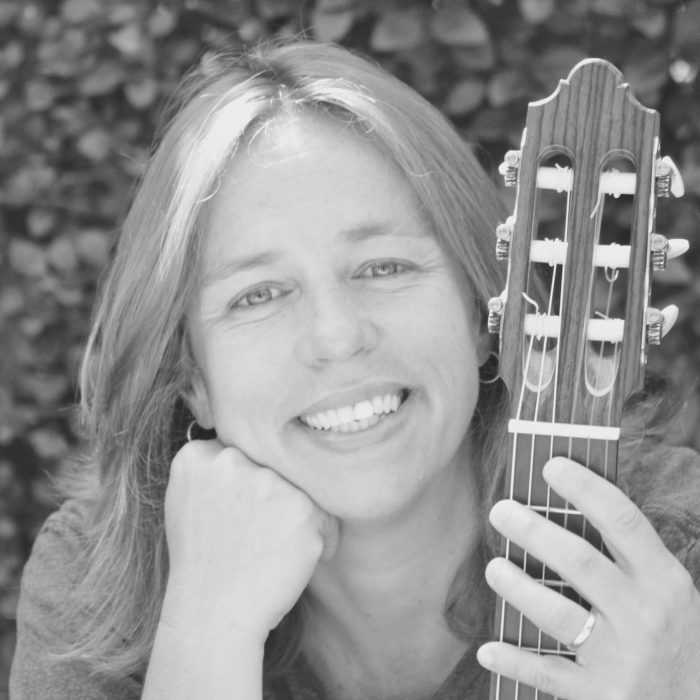
As with many of the challenge videos, this pairing appeared, on the surface, to have relatively little common ground, as acknowledged by both George and Lauren. However, it ultimately revealed a number of thought-provoking points of connection. This was particularly evident in relation to the idea of performing in a social environment, that is, in the presence of others. I found the central distinction that emerged in Lauren’s work between being watched and being seen, as well as the implied spectrum of experience between these two positions, themselves matters of subjective perception, particularly illuminating. This clearly had an impact on George, who drew some interesting parallels between deep listening and the prospect of deep performing. Using practice-research methods to interrogate ideas of the internal and external, he identified connections that, in turn, resonated with Lauren’s investigation of safety in the transition between spaces. In this respect, I particularly appreciated Lauren’s idea of using sound as a lens through which to address questions of safety and space. As part of the exchange, the fourth stage of George’s framework appeared especially influential as a research method, contributing to some impactful refinements in the framing of Lauren’s listening walks.
In addition to these productive points of contact and shared influence, I also found the discussion of composition and listening as distinct acts of performance both interesting and relevant to my own work, particularly my current interest in the performative dimensions of embodied and empathetic listening practices within the field of new music. As PhD students at different stages of their journeys, it was also valuable to witness both George’s and Lauren’s reflexive consideration of how methods can change and evolve as projects progress, in response to one’s own creative thinking, to lessons learned from others, and to the often productive constraints of ethical research practice.