Abstract / Summary
Researcher(s):


Click here to submit and read peer review
No peer review comments on this section yet.
Research Problem
The Research Challenge was initiated by the following Call For Participation
Challenge Overview
This Research Challenge invites postgraduate researchers and early career researchers (PGRs & ECRs) to share, exchange, and reflect on the qualitative methods they use to investigate their own musical practice. Different research aims, forms of practice and contexts require different methods and the C21MP research centre is dedicated to supporting PGRs and ECRs by conducting research into those methods. This project is one of several steps we are taking in that direction.
Practice research requires methods that can get close to the lived experience of doing music — the decisions, impulses, and processes that unfold in real time, before reflection reshapes them. Established qualitative methods such as stimulated recall, think-aloud protocols, video diary, and autoethnography have all been used in this context, but researchers frequently adapt and refine these approaches to suit their specific practice and research questions.
This challenge is designed to describe, make explicit and share that methodological knowledge — the customisations, workarounds, and insights that rarely make it into formal publications.
What does the challenge involve?
- You create a 10-minute video demonstrating a qualitative method you use in your own practice research — including how and why you have adapted it to your aims, practice and context.
- You are paired with another participant and exchange videos.
- You explore their method in relation to your own practice and create a second 10-minute response video.
- You watch your partner’s response to your method.
- You and your partner meet online for a 20-minute filmed discussion: 10 minutes on how each of you interpreted and adapted the method, and 10 minutes analysing what the exchange revealed.
The four videos and the discussion are edited into a 60-minute research output and published by C21MP as a jointly authored, DOI-allocated, peer-reviewed practice research publication via the UK’s JISC Octopus.ac system.
What kinds of methods are in scope?
Any qualitative method that aims to capture the lived experience of musical practice from the inside — for example:
- Stimulated recall (video-assisted or audio-assisted)
- Think-aloud / verbal protocol
- Autoethnography
- Practice diary / video diary
- Reflective journaling
- Other approaches — provided they are oriented towards lived experience rather than post-hoc theoretical explanation
Researcher(s):


Publication Type: Research Problem
Date Published:
Language: English
Licence: CC BY-NC-SA 4.0
DOI:
Click here to submit and read peer review
No peer review comments on this section yet.
Add a peer review comment Click here to cancel reply.
Rationale / Hypothesis
Proposal: Realising clarity: an interpretive phenomenological exploration of multi-faceted approaches in dense music production
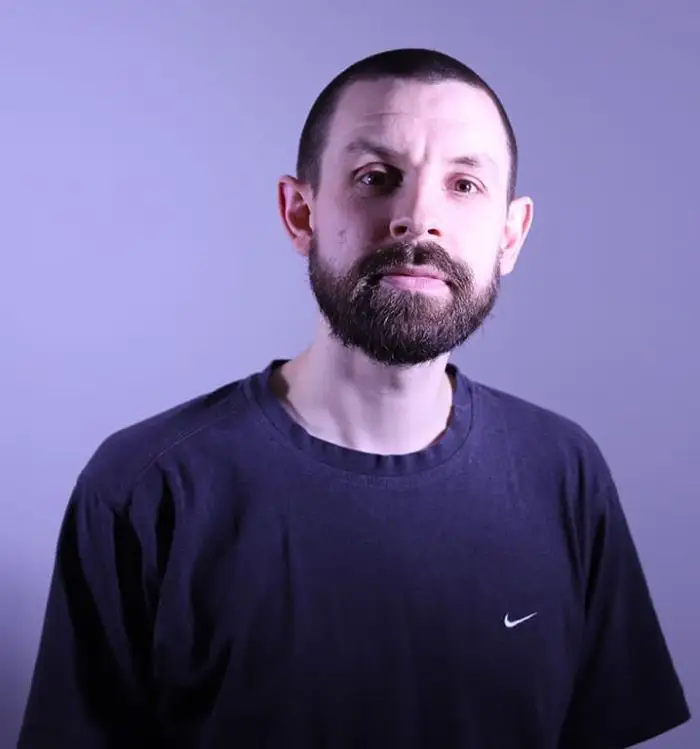
Robbie Tooth
My proposed project for this challenge emerges from my PhD research, Realising clarity: an interpretive phenomenological exploration of multi-faceted approaches in dense music production, which examines how mix engineers work with maximal, densely layered material. In this context, I will focus on one strand of my practice: working as a ‘finisher’ mix engineer on a current collaboration with a Leeds-based artist and producer in contemporary pop/alternative music.
For the first video, I will document a typical unattended mix session using screen capture and audio recording as I build a first-pass mix from supplied stems. I will not explain during the session, allowing my habitual, relatively impulsive workflow to unfold as it normally would. The following day, I will use the screen recording for video-assisted stimulated recall, talking through what I now notice about my earlier decisions: how I handled the arrangement, where I hesitated or changed direction, and whether the mix feels exciting, coherent and right for the client.
The aim is to bring out automatic aspects of my mixing practice that are hard to capture in written reflection and to offer a simple way for other mixers in similar situations to examine their own work more honestly
Proposal:
Analysis, Performance, and Autoethnographic Reflective Journalling
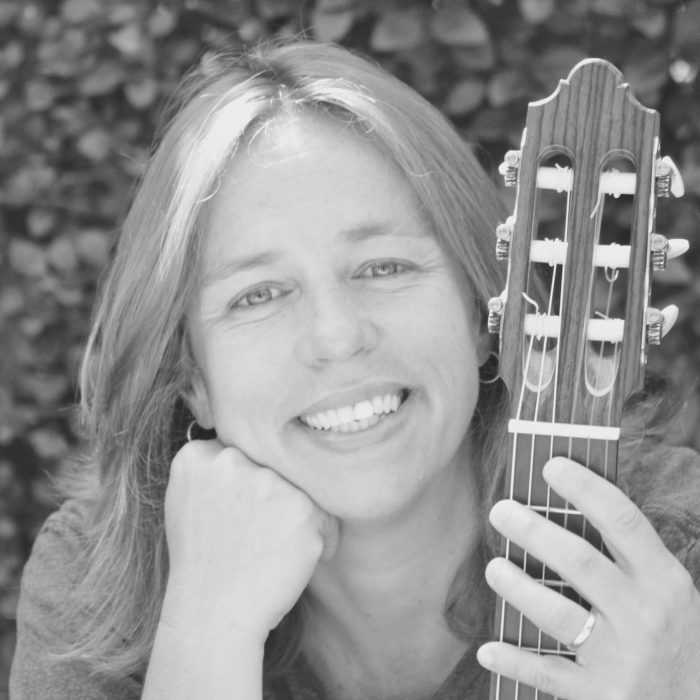
Gabriel Jones
I discovered quite by accident during my PhD that I was an artistic researcher: a musicologist-performer. The process of diarising and reflective journalling that I instinctively undertook during my practice-based research on Stockhausen’s Klavierstücke contributed to this personal development and the emergence of a methodology in which traditional methods of score-based and phonomusicological analysis became closely bound up with my embodied analytical insights as a performer.
As a post-doctoral researcher, I am currently contextualising, theorising, and expanding this methodology within the broader field of New Music performance studies. The qualitative artistic research methods I will share involve the autoethnographic integration of reflective digital journalling on both my daily practice at the piano and my analytical activities away from the instrument. I am thus interested in capturing the technical decisions and diachronic paths taken in these domains, as well as the cross-fertilisation of my emergent insights. Above all, I am interested in documenting how I feel about these concurrent activities, both alone and in combination, with the aim of investigating and inviting my audience to engage with the valual qualities (Berger 2010) of satisfaction, worry, excitement, and even boredom that colour my experience and inform the dynamics of my analytical process.
Reference
Berger, H. M. (2010). Stance: Ideas about emotion, style, and meaning for the study of expressive culture. Wesleyan University Press.
Researcher(s):
Publication Type: Rationale / Hypothesis
Date Published:
Language: English
Licence: CC BY-NC-SA 4.0
DOI:
Click here to submit and read peer review
No peer review comments on this section yet.
Add a peer review comment Click here to cancel reply.
Method
This protocol establishes a structured method for collaborative practice research between two music practitioners through asynchronous video exchange. Participants independently develop proposals and create 10-minute videos exploring a practice concept, technique, or approach. Videos are exchanged, prompting each participant to create a second 10-minute response exploring how their partner’s work stimulates new directions in their own practice. The process concludes with a 20-minute filmed discussion analysing interpretative choices and outcomes. The protocol produces a 60-minute structure, serving as peer-reviewed, DOI-allocated practice research output via JISC Octopus. This method makes tacit practice knowledge explicit and generates transferable insights into practice innovation.
For further details see: https://doi.org/10.57874/s80m-1g18
Researcher(s):
Publication Type: Method
Date Published:
Language: English
Licence: CC BY-NC-SA 4.0
DOI:
Click here to submit and read peer review
No peer review comments on this section yet.
Add a peer review comment Click here to cancel reply.
Results / Sources
Researcher(s):
Publication Type: Results / Sources
Date Published:
Language: English
Licence: CC BY-NC-SA 4.0
DOI:
Click here to submit and read peer review
No peer review comments on this section yet.
Add a peer review comment Click here to cancel reply.
Analysis
Researcher(s):
Publication Type: Analysis
Date Published:
Language: English
Licence: CC BY-NC-SA 4.0
DOI:
Click here to submit and read peer review
No peer review comments on this section yet.
Add a peer review comment Click here to cancel reply.
Interpretation - Coming Soon
Researcher(s):

Publication Type: Interpretation
Date Published:
Language: English
Licence: CC BY-NC-SA 4.0
DOI:
Click here to submit and read peer review
No peer review comments on this section yet.
Add a peer review comment Click here to cancel reply.
Applications / Implications - Coming Soon
Researcher(s):
Publication Type: Applications / Implications
Date Published:
Language: English
Licence: CC BY-NC-SA 4.0
DOI:
Click here to submit and read peer review
No peer review comments on this section yet.
Add a peer review comment