Abstract / Summary
Researcher(s):

Click here to submit and read peer review
No peer review comments on this section yet.
Research Problem
The Research Challenge was initiated by the following Call For Participation
Challenge Overview
This Research Challenge invites postgraduate researchers and early career researchers (PGRs & ECRs) to share, exchange, and reflect on the qualitative methods they use to investigate their own musical practice. Different research aims, forms of practice and contexts require different methods and the C21MP research centre is dedicated to supporting PGRs and ECRs by conducting research into those methods. This project is one of several steps we are taking in that direction.
Practice research requires methods that can get close to the lived experience of doing music — the decisions, impulses, and processes that unfold in real time, before reflection reshapes them. Established qualitative methods such as stimulated recall, think-aloud protocols, video diary, and autoethnography have all been used in this context, but researchers frequently adapt and refine these approaches to suit their specific practice and research questions.
This challenge is designed to describe, make explicit and share that methodological knowledge — the customisations, workarounds, and insights that rarely make it into formal publications.
What does the challenge involve?
- You create a 10-minute video demonstrating a qualitative method you use in your own practice research — including how and why you have adapted it to your aims, practice and context.
- You are paired with another participant and exchange videos.
- You explore their method in relation to your own practice and create a second 10-minute response video.
- You watch your partner’s response to your method.
- You and your partner meet online for a 20-minute filmed discussion: 10 minutes on how each of you interpreted and adapted the method, and 10 minutes analysing what the exchange revealed.
The four videos and the discussion are edited into a 60-minute research output and published by C21MP as a jointly authored, DOI-allocated, peer-reviewed practice research publication via the UK’s JISC Octopus.ac system.
What kinds of methods are in scope?
Any qualitative method that aims to capture the lived experience of musical practice from the inside — for example:
- Stimulated recall (video-assisted or audio-assisted)
- Think-aloud / verbal protocol
- Autoethnography
- Practice diary / video diary
- Reflective journaling
- Other approaches — provided they are oriented towards lived experience rather than post-hoc theoretical explanation
Researcher(s):


Publication Type: Research Problem
Date Published:
Language: English
Licence: CC BY-NC-SA 4.0
DOI:
Click here to submit and read peer review
No peer review comments on this section yet.
Add a peer review comment Click here to cancel reply.
Rationale / Hypothesis
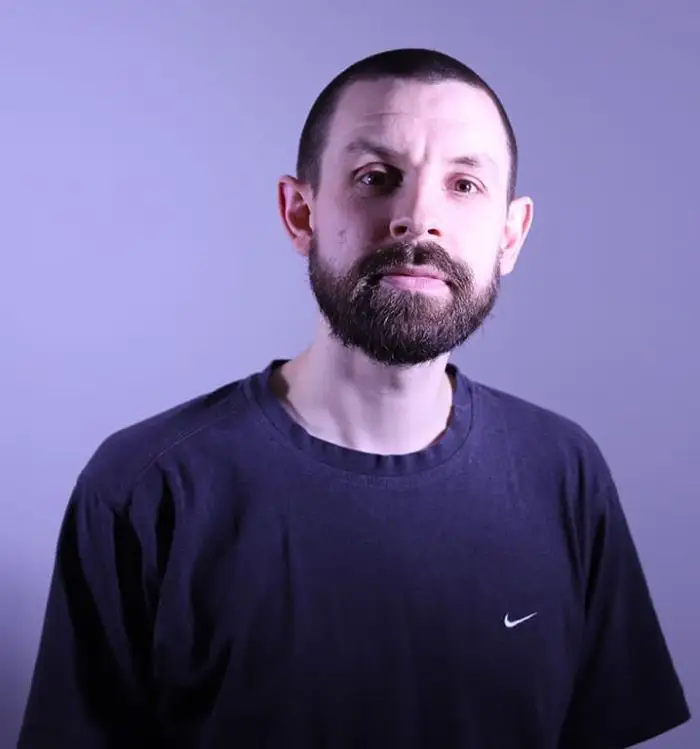
Proposal: A video diary of the workshop for my piece “Hearing Queer”
Miika Hyytiäinen
I am a composer and researcher, specialising in the collaboration and communication between singers and composers. In this challenge, I propose a video diary of the workshop for my piece “Hearing Queer”. The process includes singer and author Isabella Shaw and saxophonists Aina Daviden and Sara Zazo. In May, the piece is still in early stages, so there is a lot of need for reflection, challenging my own ideas and back-and-forth, which I will collect in a diary oriented toward autoethnography. I also used a similar method in my article ”Composing anti-acousmatically: an autoethnography”. I’m confident that some recordings from the actual workshops can be used, since the reflection on how to proceed with the composition is my own. Because of the theme of the work, the auditory aspects of queerness in history require careful ethical consideration.
My musical style is the German experimental music theatre that relates to performance art and theatre, but is still strongly rooted in musical practices. The musicians are classically trained, but all are experts in contemporary music.
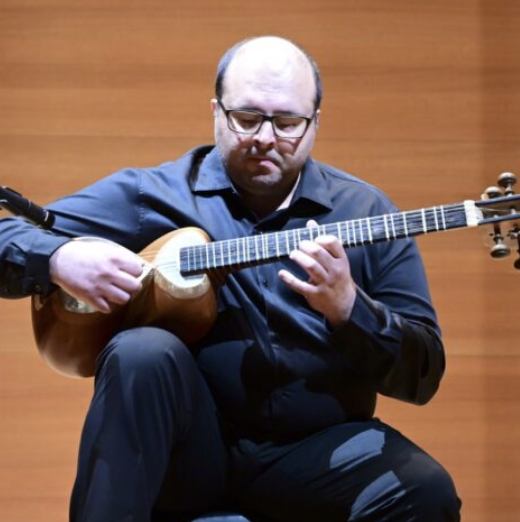
Proposal: Stimulated Recall as a Method for Analysing Embodied Performance Practice
Farhad Aref
As a PhD researcher in music, my work engages with practice-based inquiry into musical performance within an intercultural context. This project employs stimulated recall as a qualitative method to investigate the embodied and cognitive processes that emerge during performance.
Stimulated recall is applied through the analysis of recorded performances of my own practice. By revisiting these recordings and pausing at specific moments, I articulate the tacit decisions, physical gestures, and expressive intentions that shape the unfolding musical material in real time. This method enables access to forms of knowledge that are not readily captured through notation or post-hoc theoretical reflection.
The approach is particularly suited to my research, as it foregrounds the role of embodiment and situated knowledge in the construction of musical meaning. It allows for a nuanced examination of how technique, expression, and structure arise dynamically through the interaction between performer, instrument, and sound.
This project demonstrates the potential of stimulated recall as a rigorous methodological framework for generating insight from within musical practice, contributing to broader discussions in practice-based research and performance studies.
Researcher(s):
Publication Type: Rationale / Hypothesis
Date Published:
Language: English
Licence: CC BY-NC-SA 4.0
DOI:
Click here to submit and read peer review
No peer review comments on this section yet.
Add a peer review comment Click here to cancel reply.
Method
This protocol establishes a structured method for collaborative practice research between two music practitioners through asynchronous video exchange. Participants independently develop proposals and create 10-minute videos exploring a practice concept, technique, or approach. Videos are exchanged, prompting each participant to create a second 10-minute response exploring how their partner’s work stimulates new directions in their own practice. The process concludes with a 20-minute filmed discussion analysing interpretative choices and outcomes. The protocol produces a 60-minute structure, serving as peer-reviewed, DOI-allocated practice research output via JISC Octopus. This method makes tacit practice knowledge explicit and generates transferable insights into practice innovation.
For further details see: https://doi.org/10.57874/s80m-1g18
Researcher(s):
Publication Type: Method
Date Published:
Language: English
Licence: CC BY-NC-SA 4.0
DOI:
Click here to submit and read peer review
No peer review comments on this section yet.
Add a peer review comment Click here to cancel reply.
Results / Sources
Researcher(s):
Publication Type: Results / Sources
Date Published:
Language: English
Licence: CC BY-NC-SA 4.0
DOI:
Click here to submit and read peer review
No peer review comments on this section yet.
Add a peer review comment Click here to cancel reply.
Analysis
Researcher(s):
Publication Type: Analysis
Date Published:
Language: English
Licence: CC BY-NC-SA 4.0
DOI:
Click here to submit and read peer review
No peer review comments on this section yet.
Add a peer review comment Click here to cancel reply.
Interpretation - Coming Soon
Researcher(s):

Publication Type: Interpretation
Date Published:
Language: English
Licence: CC BY-NC-SA 4.0
DOI:
Click here to submit and read peer review
No peer review comments on this section yet.
Add a peer review comment Click here to cancel reply.
Applications / Implications - Coming Soon
Researcher(s):
Publication Type: Applications / Implications
Date Published:
Language: English
Licence: CC BY-NC-SA 4.0
DOI:
Click here to submit and read peer review
No peer review comments on this section yet.
Add a peer review comment